

Buying a car often involves financing, which means your credit score plays an important role in the interest rate and loan options you receive. Understanding how credit scores affect car loans can help you prepare before visiting a dealership.
How Credit Scores Affect Car Loans
Lenders use credit scores to determine how risky it may be to lend money. A higher score usually means better loan terms and lower interest rates.
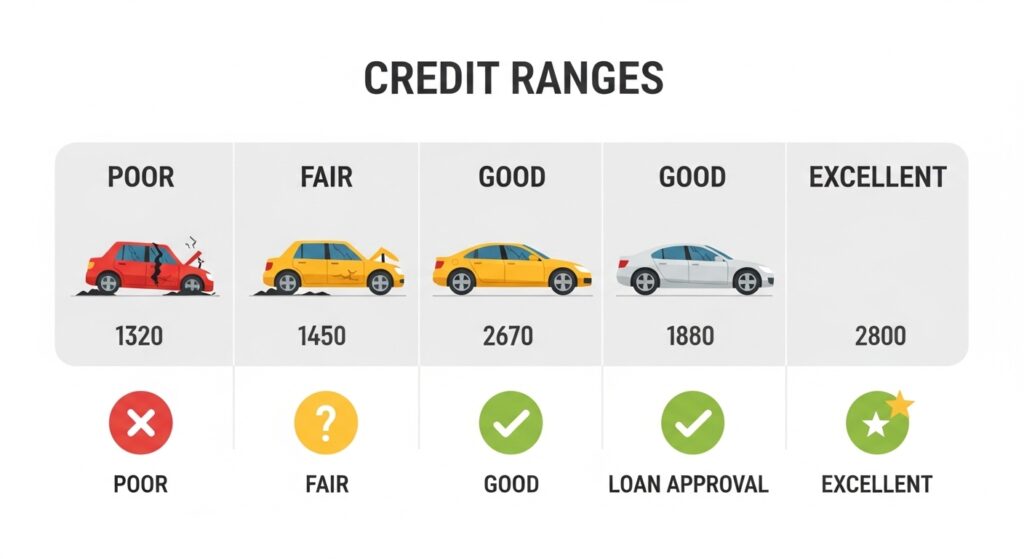
While every lender is different, credit scores are often grouped into general ranges.
Typical ranges include:
- Excellent credit: 750 and above
- Good credit: 700 – 749
- Fair credit: 650 – 699
- Subprime credit: 600 – 649
- Deep subprime: Below 600
Higher scores generally lead to lower interest rates and more financing options.
Can You Buy a Car With Bad Credit?
Yes. Many lenders approve car loans for buyers with lower credit scores. However, buyers with lower scores may experience:
- Higher interest rates
- Larger down payment requirements
- Shorter loan terms
Improving your credit score before buying a car can significantly reduce the total cost of the loan.
How to Improve Your Credit Before Buying a Car
If you plan to buy a car in the near future, consider taking a few steps to improve your credit:
- Pay all bills on time
- Reduce credit card balances
- Avoid opening new credit accounts
- Review your credit report for errors
Even small improvements can help you qualify for better loan terms.

Related Guides
Car Financing Guide
First-Time Car Buyer Guide
